
What "extending Mews, not replacing it" actually means
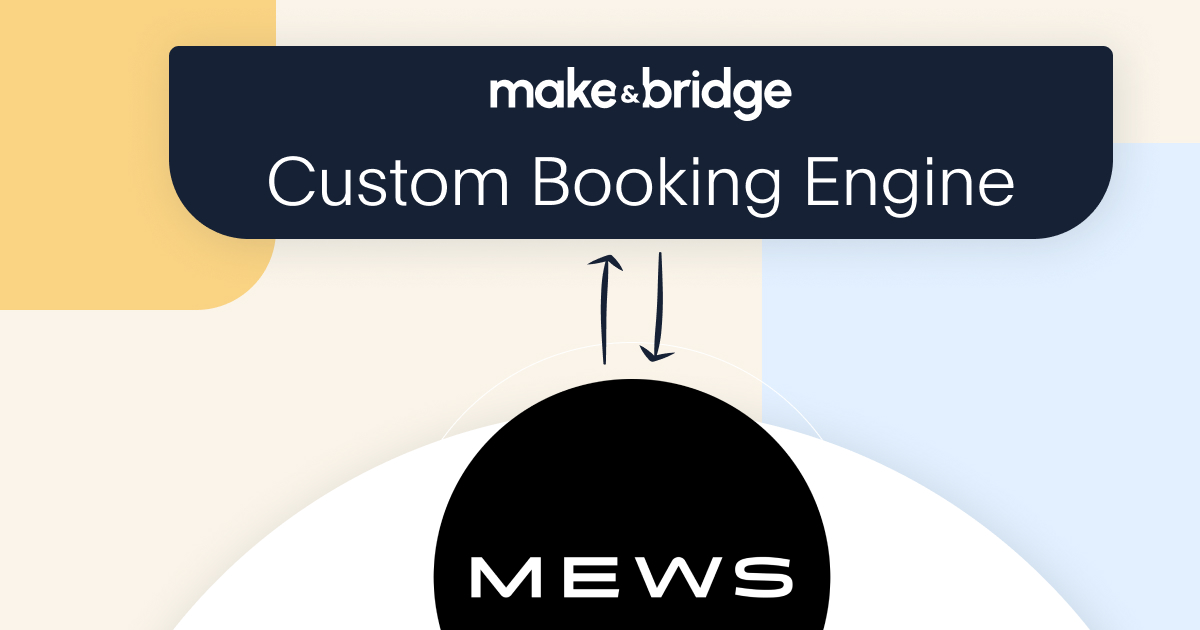
The line we say a lot
"We extend Mews, we don't replace it" shows up in nearly every conversation we have about the Custom Booking Engine. It's true, but it's also become shorthand, and shorthand is worth unpacking once in a while so it doesn't turn into a slogan nobody can explain.
Here's what it actually means at the technical level.
Reservations go through the Mews API, not around it
When a guest completes a booking through the Custom Booking Engine, that reservation is created directly in Mews using the Mews API, the same mechanism any other booking channel uses to write into the system. There's no separate database holding a parallel copy of your reservations. No batch export at the end of the day, no sync job quietly failing overnight and nobody noticing until a guest shows up to a room that was double-booked.
Availability, rates, taxes, and payments stay exactly where they've always lived: inside Mews. The booking engine reads from that live data to show guests what's actually available, and writes back into it the moment a booking is confirmed.
What the booking engine actually adds
If Mews already handles all of that, the natural question is what the booking engine is doing at all. The answer is everything in front of the reservation logic: the guest-facing flow itself.
That includes how pricing gets presented (tiered monthly rates instead of a flat nightly number, for example), what guest information gets collected and when, how upsells and add-ons show up in the flow, and how the whole thing looks and feels compared to the default Mews booking engine. None of that changes what Mews is doing underneath. It changes what the guest sees and how much manual work your team has to do around what they submit.
Why the direct connection matters
A booking tool that isn't wired directly into the PMS can often get by on manual workarounds when the setup is simple: standard nightly stays, standard rates. The limits show up once the stay structure gets more specific, tiered monthly pricing, once-charged products, custom fee logic, the kind of thing a channel manager wasn't really built to relay cleanly.
That's not strictly a scale problem. A single retreat center billing a fixed program fee can run into it as easily as a fifty-property portfolio can. Scale just makes the friction harder to ignore, since manual reconciliation that's mildly annoying on one property becomes a real operational cost across many. Building reservations straight through the Mews API avoids the limitation at the source, regardless of how many properties are involved, because the booking engine isn't a channel talking to Mews from the outside. It's writing into Mews the same way Mews itself would.
That's the practical difference between a booking tool that happens to work with Mews and one that's actually built on it.
Curious what this looks like against your own portfolio? [Book a demo] and we'll walk through the setup.